
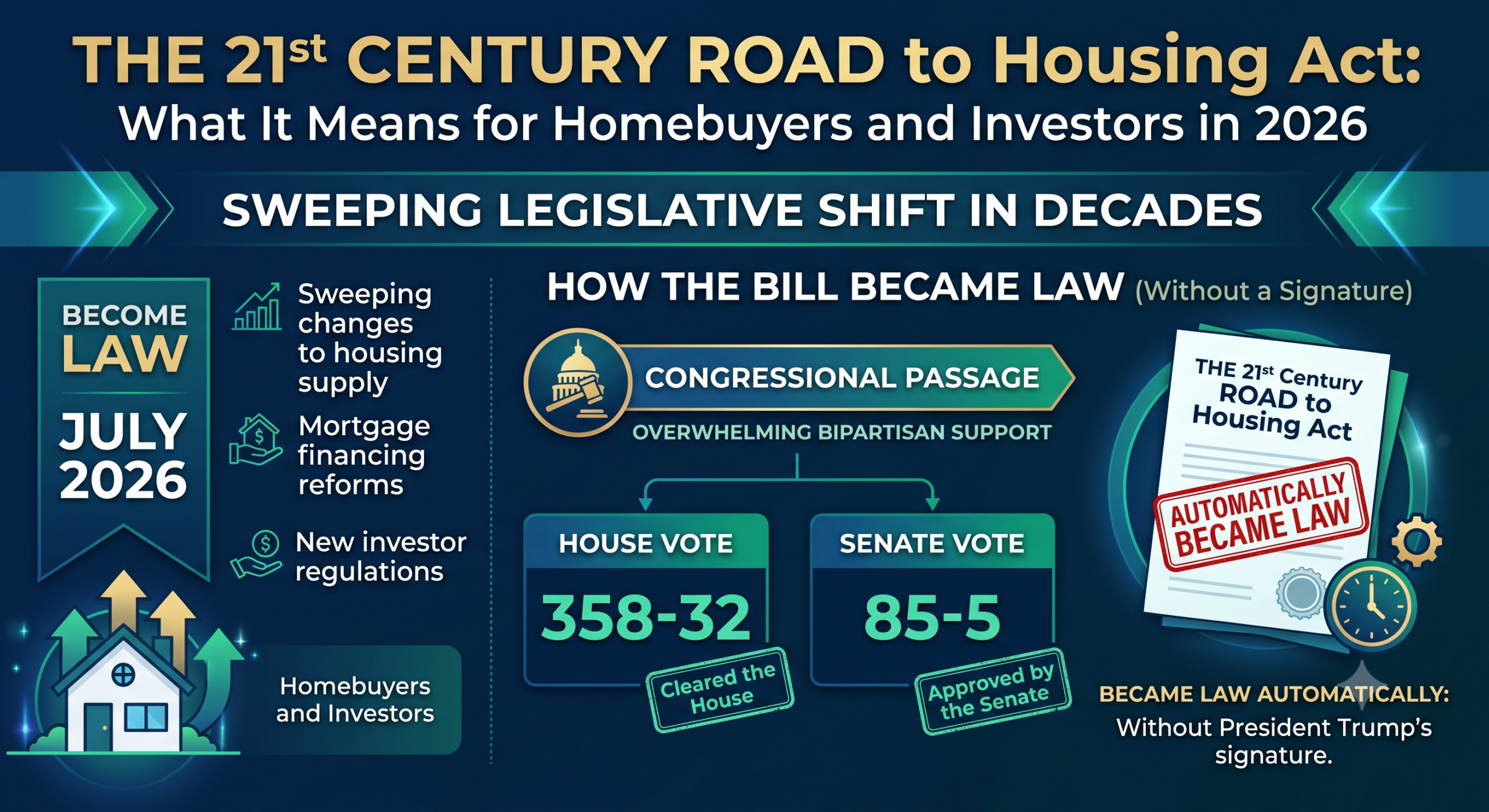
The real estate landscape is experiencing its biggest legislative shift in decades. The 21st Century ROAD to Housing Act officially became law in July 2026, promising sweeping changes to housing supply, mortgage financing, and investor regulations.
Whether you are a first-time homebuyer, a real estate professional, or a seasoned investor, this bipartisan package is set to reshape the market.
How the Bill Became Law (Without a Signature)
The legislation passed Congress with overwhelming bipartisan support, clearing the House in a 358-32 vote and the Senate 85-5. Interestingly, it automatically became law without President Trump’s signature.
Here is a breakdown of the most significant changes affecting the housing market today.
1. Clamping Down on Wall Street Mega-Investors
One of the most talked-about provisions is the new restriction on institutional investors. For years, everyday homebuyers have struggled to compete with corporate giants buying up starter homes with all-cash offers.
Under the new law, entities that control 350 or more single-family homes are prohibited from purchasing additional existing single-family properties. While there are exceptions to encourage new development, such as “build-to-rent” community projects that must eventually be sold to individual buyers, this provision aims to level the playing field so traditional homebuyers have a fighting chance.
2. A Push for “Small-Dollar” Mortgages
In many lower-cost markets, buyers struggle to secure financing because lenders are reluctant to originate small-dollar loans due to low profit margins. The ROAD to Housing Act addresses this directly by authorizing a new HUD pilot program designed to increase access to FHA-backed mortgages with principal balances of $100,000 or less.
3. Treating Manufactured Homes Like Traditional Real Estate
Manufactured housing is one of the most affordable paths to homeownership, but outdated regulations have historically made financing difficult. The act modernizes these rules by eliminating the “permanent chassis” requirement.
Moving forward, manufactured homes built without a chassis will be treated on par with traditional, stick-built homes when it comes to sales, title, and financing. This shift will make it significantly easier for buyers to secure traditional mortgages for modular and manufactured builds.
4. Cutting Red Tape for Builders and Appraisers
To address the national housing shortage, the legislation includes over 45 provisions aimed at reducing regulatory barriers to new construction.
-
Appraiser Shortage Relief: The bill allows both licensed and credentialed appraisers to conduct appraisals for FHA-insured mortgage lending transactions, adding much-needed workforce capacity to prevent closing delays.
-
Faster Environmental Reviews: By expanding “categorical exclusions” under the National Environmental Policy Act (NEPA), the law fast-tracks the review process for modest infill housing, rehabilitation, and residential construction.
5. Whole-Home Repairs & Tax Credit Investments
The act does not just focus on new homes; it also aims to preserve aging housing stock. A new pilot program will offer grants and forgivable loans to homeowners and landlords to address major health hazards and necessary repairs.
Additionally, the bill increases the public welfare investment (PWI) cap for banks from 15% to 20%. According to affordable housing advocates, this small percentage increase is a massive win that could unlock billions of dollars in investments for low-income housing tax credits.
What This Means for Your Next Move
While building new inventory takes time, the 21st Century ROAD to Housing Act lays the groundwork for a more accessible market. By restricting corporate mega-landlords, fast-tracking construction, and modernizing loan rules, the federal government is attempting to alleviate the pressure on everyday buyers.
Are you looking to navigate this changing market? Keep following our blog for the latest updates on mortgage rates, local inventory, and housing policies.